
What Do I Say to Someone with Cancer?
Wednesday, the middle of another week that blends into all the others.
I was in my kitchen fixing myself some lunch when my phone rang. It was my sister.
That’s weird. She never calls.
“Hey! What’s up?”
“I have news,” she said. I wanted to hope she was pregnant, as she’d been hoping for that for a while now, but her voice didn’t have a “finally, a baby” vibe to it. “I was just diagnosed with breast cancer.”
I sat down.
“Breast cancer? Oh my gosh. Steffi … I don’t know what to say. Where are you right now?”
“I’m home. Brad is here. I don’t know much more than that yet, and I’ll let you know as soon as I do. But I wanted you to know what’s going on.”
“Of course. Thank you. I’m here for you, thick and thin!”
“I know. Thanks. Talk to you later. Love you.”
“Love you. Bye.”
Steffi? Cancer?
My mind was racing with fear, with desire to help, with shock.
One thing became clear—we needed to make sure Steffi never doubted we were on her side.
I remembered a month or two ago, a coworker mentioned a book that helped them talk about all the support things. She said it helped them to have conversations about things they never would usually talk about, like, do you want visitors? She was so surprised at how that went. Who would even ask that? Unless you’re actively puking or something, of course you want visitors.
Right?
Phone still in hand, I texted her.
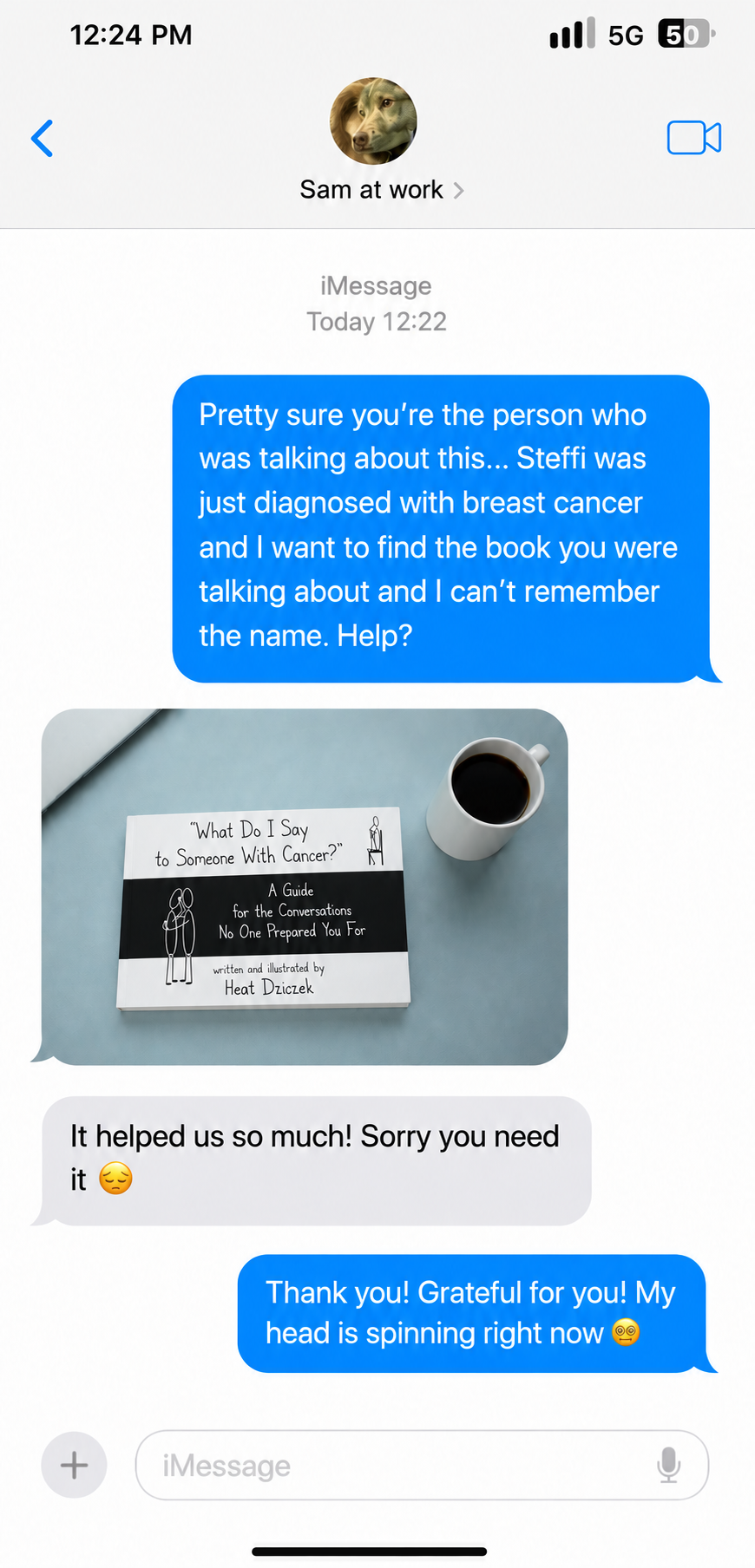
The narrator and Steffi aren’t real, but the phone call is. With over two million anticipated cancer diagnoses in the US in 2026 (that’s almost four per minute), this phone call, or some version of it, is happening right now.
Here's the book she recommended:
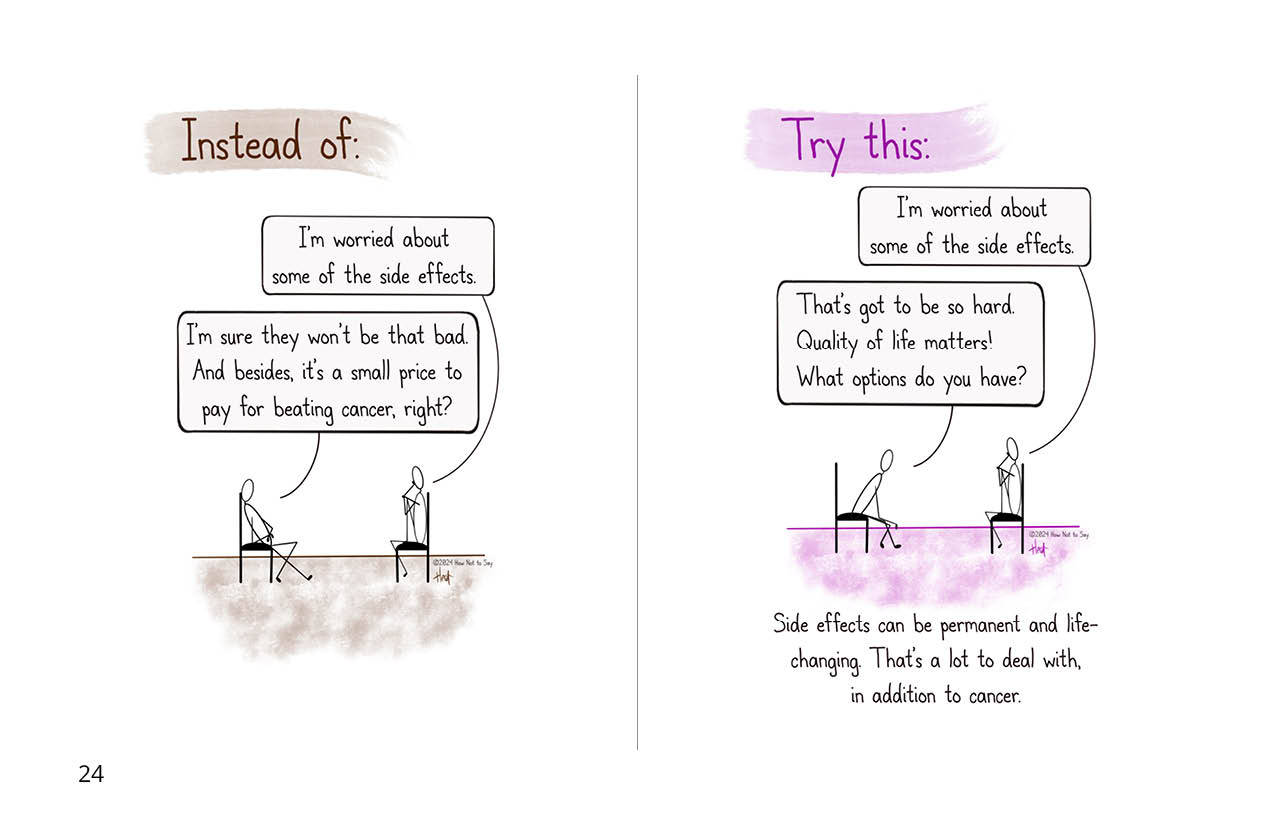
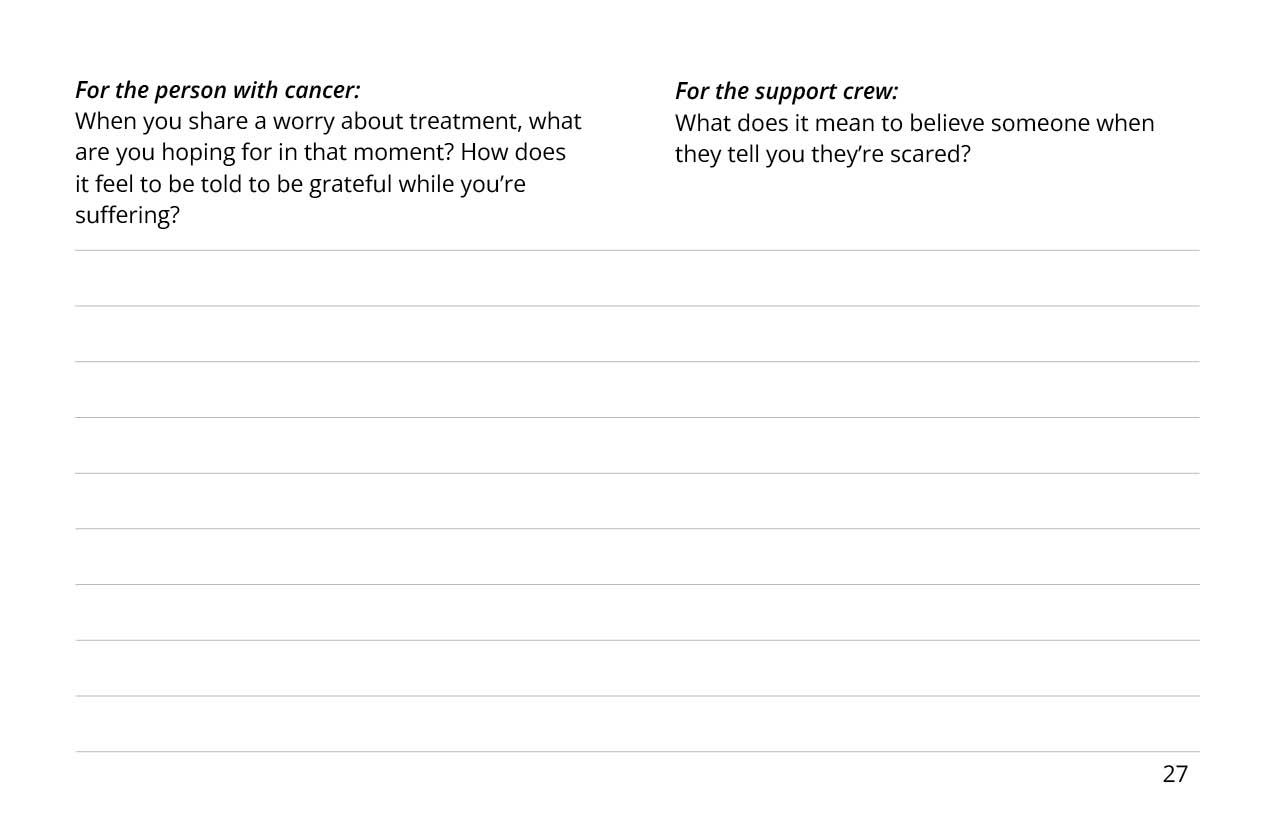
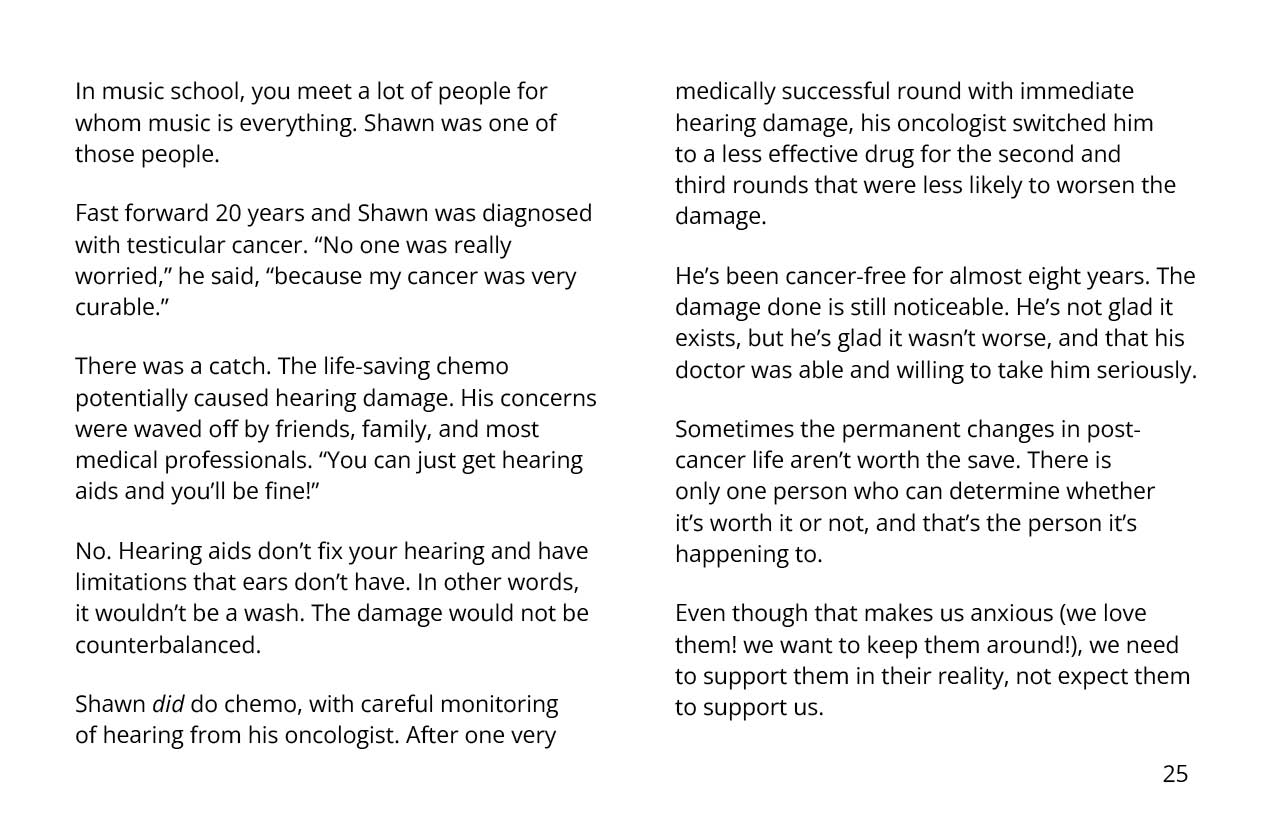
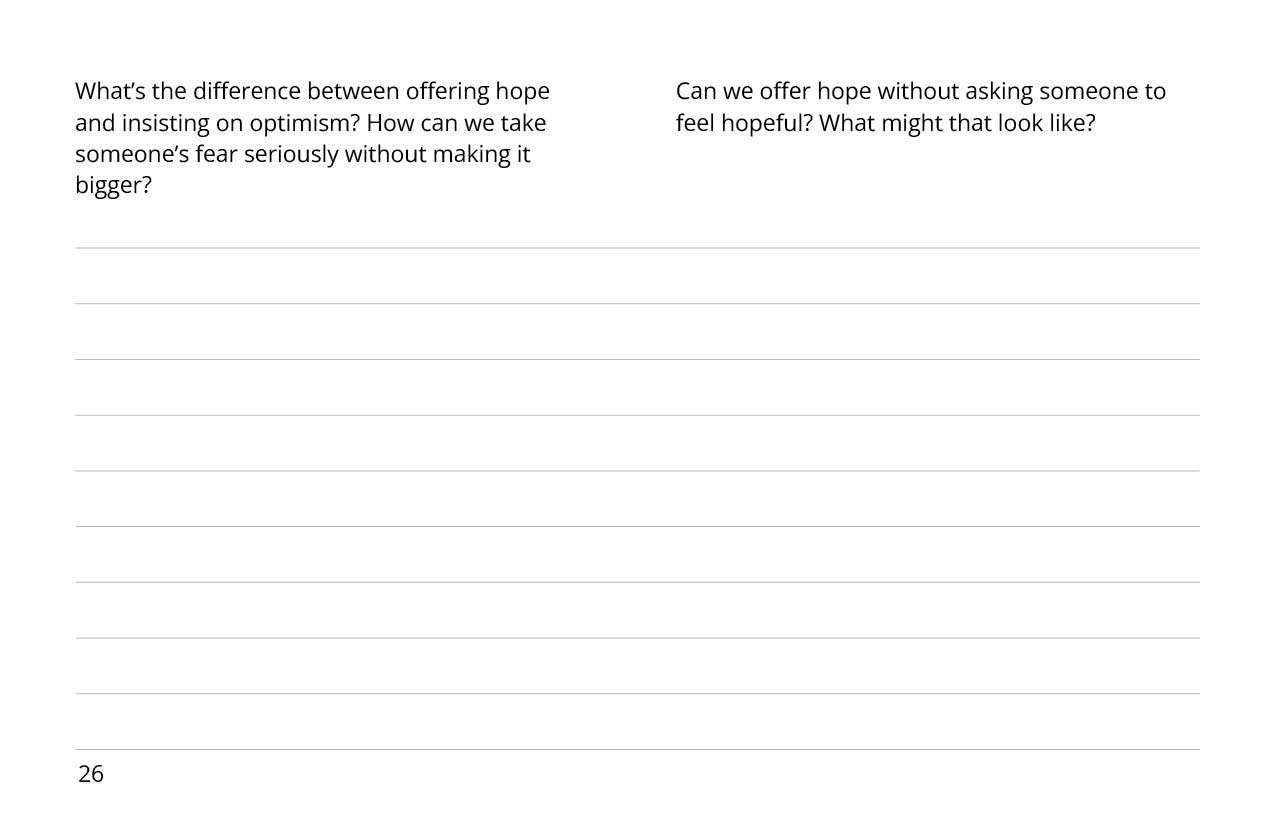
click to turn the page
Yes, please
What Do I Say to Someone With Cancer? A Guide for the Conversations No One Prepared You For funded on Kickstarter. You can preorder a copy here until I send the order to the printer. Shipping will be charged separately, at the time of shipping.
NOTE: at the time the video was made, the book was a work in progress. Since then, the layout changed to landscape and “what goes where” has changed, but the content is the same. It’s all part of the editing process. The images in the sample above the video are accurate to the current layout.
In my family, we use humor to deal with tough times. These cards helped me, and my family keep the humor, but steer clear of being hurtful. Laughter is great medicine.
Reading through these as a family helped us avoid missteps and blind spots. This diagnosis is new for all of us. Reading through the cards helped us think and talk productively and authentically without being hurtful.
These cards are a fantastic tool that take the mental load off of caregivers and family members. The idea of having a simple yet effective card that can offer so much in an extremely scary and unknown time is really something beautifully amazing.
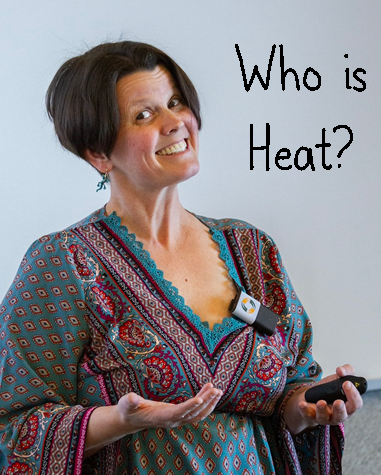
A note from the creator
I’ve been on both sides of the awkward cancer conversations, living through treatment for Hodgkin’s lymphoma and supporting too many others through a variety of diagnoses. I thought people who were good at those conversations were just born that way. Turns out, it’s a skill we can learn, and it’s not as hard as we fear. I hope what you see here helps you to support people you care about, in cancer and in any difficult season.
Free download
It’s easy for help to get muddled. Use this one-page download to keep track of who is doing what and when. Because “I thought you were going to do it” doesn’t get it done.
FAQs
Who is this for?
A patient and their support crew. Sometimes, that’s their family. Sometimes, it’s their friend group. Sometimes, it’s their colleagues. Sometimes, it’s their church family. Sometimes, it’s a person or two from each. Usually, it’s one of those people who picks up the book, not the patient.
The goal is to shed light on situations where patients commonly feel isolated, hurt, or otherwise negative about how their people are interacting. (It’s nearly always with good intentions.) And to clarify what everyone’s job is as a team.
Does the patient have to be included?
No, if there’s a reason they can’t be. If they can, their input is exceptionally valuable. But the conversations are still useful and valuable with the support crew present.
Who should lead the conversations?
Depends on the dynamics of your crew. You know better than I do. The point of the book is to have everything you need to lead the conversation, even if you’re not really comfortable with it.
What if my people aren't touchy-feely?
The tools are meant to do the heavy lifting of bringing topics to light so you don’t have to, and the resulting conversations aren’t meant to be therapy. Each card has a range of prompts—pick the ones that feel right for your group.
Can this be used long-distance?
Absolutely. The book is designed with this possibility in mind. Out-of-towners can buy the ebook to follow along.
Yes, please
What Do I Say to Someone With Cancer? A Guide for the Conversations No One Prepared You For funded on Kickstarter. You can preorder a copy here until I send the order to the printer. Shipping will be charged separately, at the time of shipping.